
봄 웜 · Spring warm
- Lip
- Coral, peach, apricot pink
- Blush
- Peach, light coral
- Base
- Yellow-leaning, dewy
Safe bet: Coral pinkSkip: Grey lilac
Korean color analysis (퍼스널컬러 진단) sorts you warm or cool first, then by brightness and clarity, into four tones and usually eight sub-types. This one reads a single selfie: you get your tone, its 12-season match and the lip, blush and base shades that suit it. Free, no account needed.
Your photo is sent securely for AI color analysis. Signed-out photos are not saved.
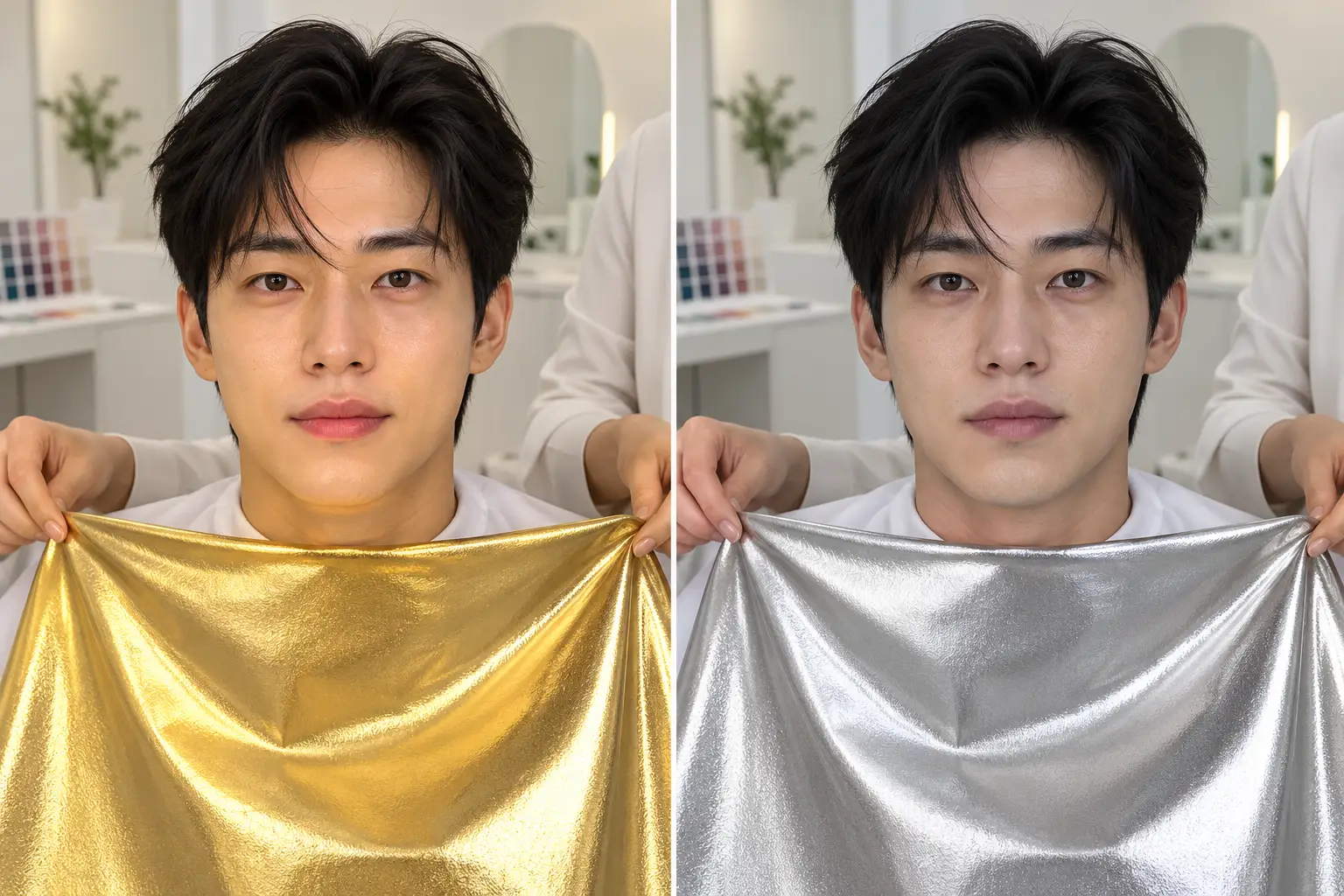
Gold, then silver, under the chin. Whichever makes the skin look clearer decides your side.
Light or deep: how much contrast your hair, eyes and skin carry together.
Bright or mute: whether clear, saturated colors light you up or swamp you.
The first split gives four tones named after the seasons: spring warm, summer cool, autumn warm and winter cool. Steps two and three cut each tone in two, which is why most Korean color analysis result cards carry eight names rather than four.
Korean color analysis was built at the makeup counter, so each tone comes with lip, blush and base picks. The safe bet is the one shade that works across every sub-type of the tone.
After a Korean color analysis, pick base shades by number and letter: the number (13, 17, 21, 23) is depth, the letter is undertone. Keep your number and switch the letter: W or Y for warm tones, C or P for cool, N in between.
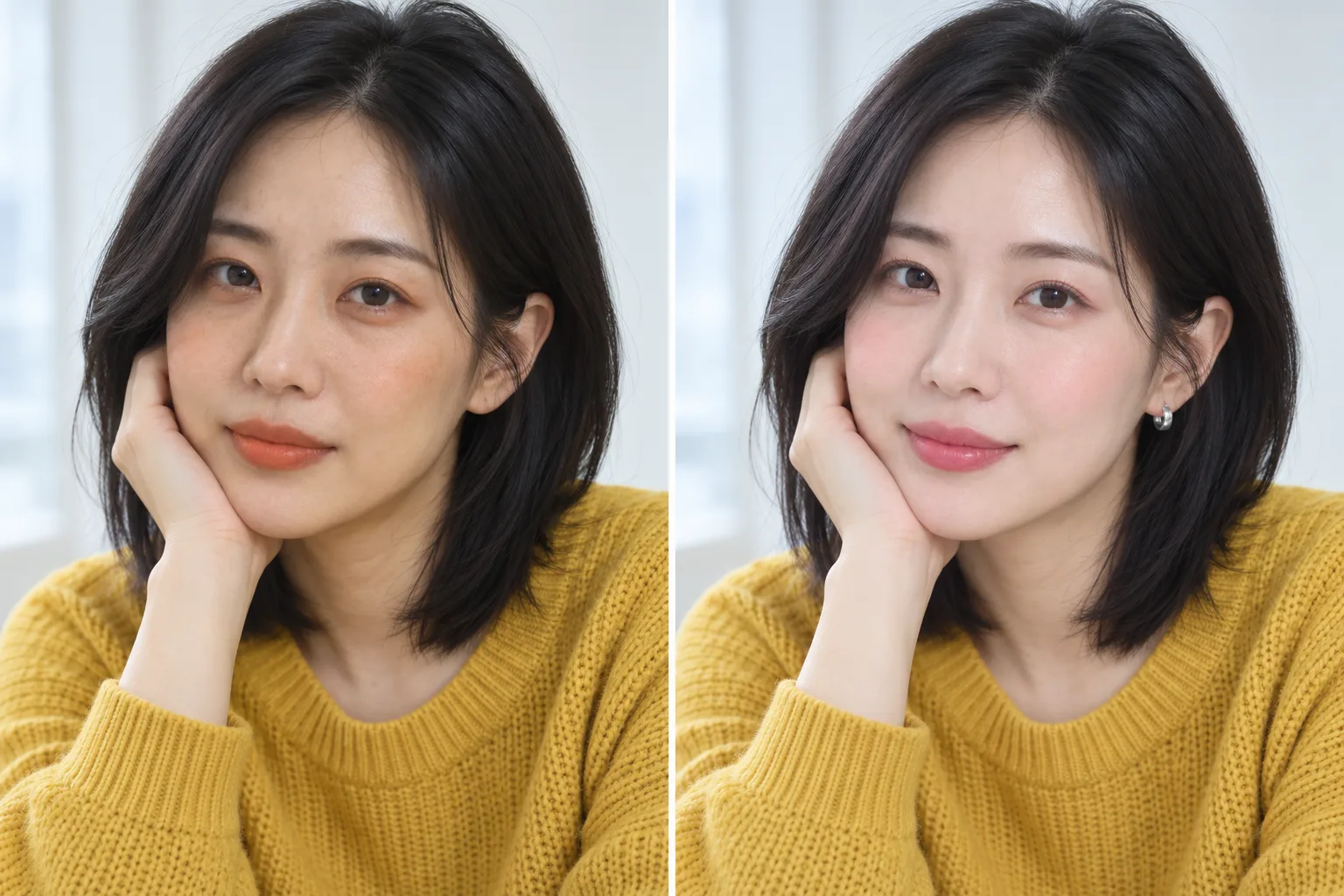
A uniform, a gift, the sweater you love anyway: everyone ends up in a color outside their tone. The Korean color analysis answer is not to change the outfit but to put the right color closer to your face.
Rose or berry lip, pink blush placed high, silver earrings to bring cool light back up to the face.
Coral lip, peach blush and gold near the face. Keep the base yellow-leaning so the skin does not go grey.
Blot the lip to a stain and add soft brown liner, so the face holds its own next to a loud color.
One clear point: a brighter lip and a dewy base. A white tee under the neckline does more than any blush.
A Korean color analysis studio session in Seoul is one to two hours of draping with dozens of fabrics, and popular studios often book out weeks ahead. Go bare-faced in a plain round-neck top.
An online Korean color analysis gives you the tone in about a minute from a daylight selfie. It is a good first read before you pay for a studio, or a way to settle a split between two tones. Friends often run it together and compare.
The free result names your tone and its colors. The full reading ($12.90, one payment, 7-day refund) adds makeup shades, hair colors and metals written from your own photo.
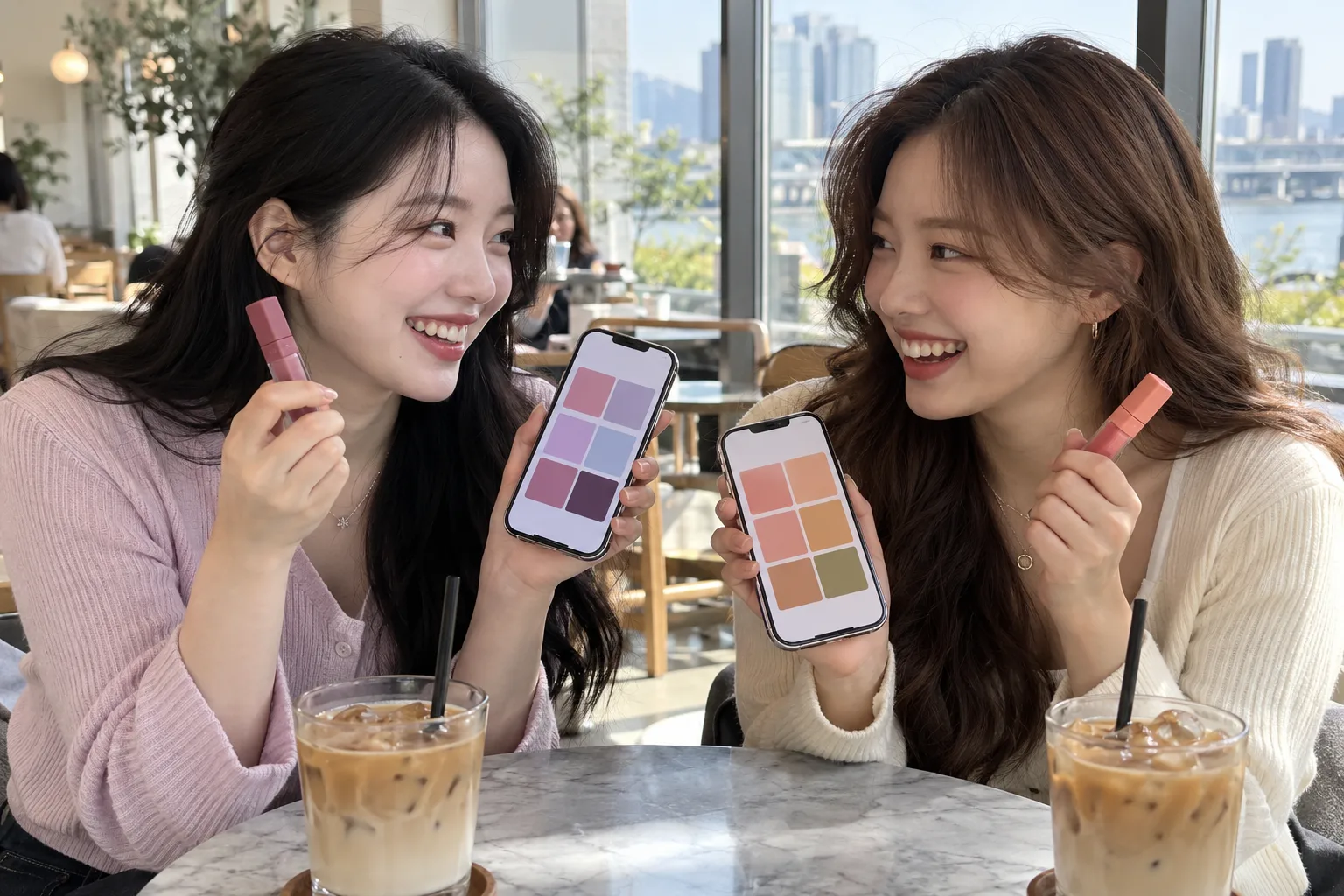
Korean color analysis uses the same seasons but leads with undertone. It names warm or cool first, then splits each tone into light, bright, mute or deep. The 12-season system lands in nearly the same places under different names.
Four tones at the base. Most Seoul studios split them into eight sub-types, and some go to 12 or 16. Your Korean color analysis result here shows the sub-type and its 12-season match, so guides written for either system make sense to you.
Yes. Your first Korean color analysis here is free and needs no account. A free account saves your tone card and adds 3 credits for a second read in different light.
Neutral skin usually lands in a mute or true sub-type. Look at the two closest tones and keep the shades they share, such as rose-beige lips and soft coral blush.
Yes. The undertone and contrast checks work at any skin depth. Deep skin is often assumed to be autumn or winter, but deep summer and spring coloring exist too, so trust the read over the stereotype.
Keep the depth number you already wear (21, 23 and so on) and change the letter after it: W or Y for warm tones, C or P for cool ones, N if you sit in the middle.
Beauty Path · 5 steps
Five steps, in the order that actually matters: your colors first, then makeup, hair, and shape. Each one takes a few minutes and leaves you with something you can use the next time you get dressed.