
Theory & Science
The Hair Color Wheel.
Science meets artistry. Identify your hair’s chemical disaster and discover the prescription for your perfect season.
Purple Shampoo
Blue Toner
Ash Infusion
Brassy Yellow
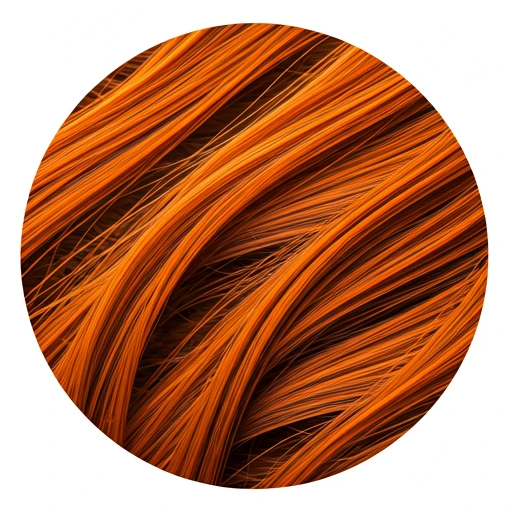
Rusty Orange
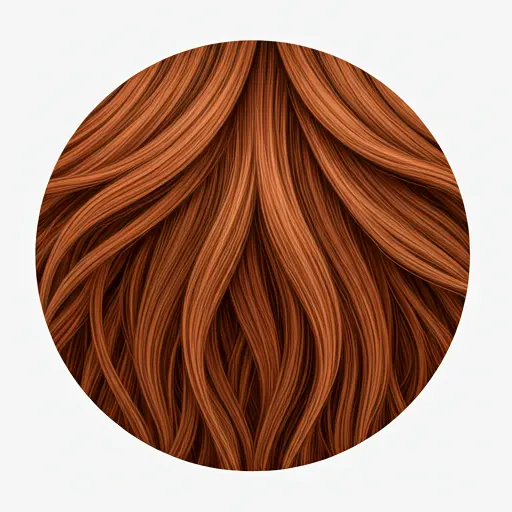
Oxidized Red
Select a disaster to see your prescription
The blue toner fixes the orange...
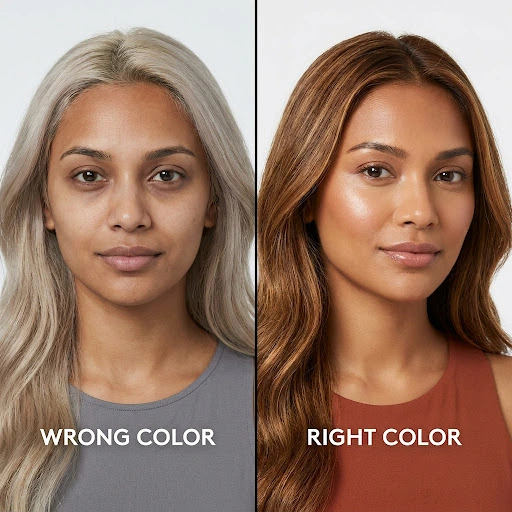
But does the color fit YOU?
Discover your seasonal match beyond the correction.
Decoding the Hair Color Wheel.
In the world of professional colorimetry, the wheel is your compass. It operates on the law of complementary colors: shades directly opposite each other on the spectrum neutralize one another.
When your hair lightens, it naturally reveals ‘underlying pigments’ — from stubborn red to bright yellow. To achieve a clean, neutral result, we must introduce the exact mathematical opposite.
This is why every professional colorist keeps a hair color wheel chart within arm’s reach. Whether you’re formulating a toner at the bowl or choosing your next box dye at home, knowing where each shade sits on the spectrum — and what cancels it — is the difference between a salon-quality result and an unexpected surprise.
The wheel divides into warm tones (yellow, orange, red) and cool tones (violet, blue, green). When hair is lightened through bleach or high-lift dye, it passes through warm stages in sequence — from deep red at Level 3–4, through coppery orange at Level 5–7, to gold-yellow at Level 8–10. Each stage requires a different cool-side neutralizer from the hair color wheel.
These warm tones are called contributing pigments — they’re the melanin remnants that stubbornly remain at every level of lightening. You cannot skip them. You can only neutralize them by applying their chromatic opposite. A hair color wheel chart maps these opposites precisely, turning guesswork into science.
The Neutralization Matrix
The wheel identifies three primary correction pairs. Each unwanted warm tone has a cool counterpart that neutralizes it on contact. These are the precision formulas every colorist relies on for high-stakes color correction.
Cancel Yellow
Violet sits directly opposite yellow on the chromatic spectrum. Apply a violet-based toner or purple shampoo to achieve a pristine, icy blonde.
Cancel Orange
Blue sits across from orange on the color wheel for hair. A blue-based toner deposits cool pigment to shift stubborn brass into a sophisticated, sandy tone.
Cancel Red
Green is the complement of red on the chromatic circle. An ash or green-based formula cools down unwanted warm brown and restores depth without muddiness.
Once you know which toner corrects the brass, see the corrected shade rendered on your own hair with our AI hair color changer.
Hair Color Wheel: The Complete Level Guide
Every hair level hides a specific underlying pigment that surfaces during lightening. The hair color wheel tells you exactly which neutralizing tone to reach for at each stage. This chart pairs each level with its exposed pigment, the correct neutralizer from the wheel, and a product recommendation you can take straight to the salon or shopping cart.
| Level | Underlying Pigment | Neutralizer |
|---|---|---|
10 | Pale Yellow | Violet |
9 | Yellow | Violet |
8 | Yellow-Orange | Blue-Violet |
7 | Orange | Blue |
6 | Red-Orange | Blue-Green |
5 | Red | Green |
4 | Red | Green |
3 | Red | Green |
2 | Deep Red | Green |
1 | Deep Red | Green |
Products listed are brand-neutral recommendations. Always strand-test before full application.
The Universal Lift Chart
The level of your hair determines which undertone will be exposed during chemical processing.
Darker levels (1–4) reveal red underlying pigments, mid-range levels (5–7) expose orange, and lighter levels (8–10) reveal yellow. Consulting both the lift chart and the hair color wheel together lets you predict exactly which neutralizing tone to reach for at every stage of the lightening process.
Developer Volume: Choosing the Right Strength
The developer (peroxide) controls how many levels of lift you achieve. Higher volume means more lift — but also more damage and more exposed underlying pigment to neutralize on the hair color wheel.
10 Vol
0–1 levels
Deposit only — darkening, toning, or refreshing existing color. Minimal underlying pigment exposure.
20 Vol
1–2 levels
Standard lift. Grey coverage and moderate lightening. Reveals orange-red pigment at mid-levels.
30 Vol
2–3 levels
Significant lift. Passes through multiple pigment stages — requires careful hair color wheel planning.
40 Vol
3–4 levels
Maximum lift. Professional use only. Exposes deep underlying pigment rapidly — multiple neutralizers often needed.
How Porosity Changes Everything
Porosity — how open or closed your hair’s cuticle layer is — directly affects how color absorbs and how toner behaves. Two people with the same Level 7 hair can get completely different results from the same formula if their porosity differs.
Low Porosity
Cuticles are tightly closed. Color takes longer to absorb, toner barely deposits, and results often come out warmer than expected because cool pigments cannot penetrate. Use heat or extend processing time.
How to spot it: Hair takes forever to get wet and resists dye
Medium Porosity
The ideal state. Color absorbs evenly, toner deposits predictably, and the hair color wheel math works as expected. Most virgin, healthy hair falls here.
How to spot it: Hair absorbs and dries at a normal pace
High Porosity
Cuticles are open wide — often from bleach damage or heat styling. Toner floods in and goes dark or ashy fast. Process for less time and dilute your toner to avoid over-depositing.
How to spot it: Hair soaks up water instantly but dries fast
5 Hair Color Wheel Mistakes That Ruin Results
Knowing the theory is not enough. These are the five mistakes people make most often — even when they understand complementary colors on the hair color wheel.
Using purple shampoo on orange hair
Fix →Purple (violet) cancels yellow, not orange. On the hair color wheel, orange sits opposite blue. Switch to a blue-toning shampoo or blue-based toner for orange and copper tones.
Skipping the underlying pigment check
Fix →Every hair level exposes a specific warm pigment when lightened. If you jump from Level 4 to Level 9 in one session, you pass through red, orange, and yellow stages — each needing a different neutralizer. Gradual lifting with a hair color wheel reference prevents muddy, unpredictable results.
Choosing a shade that fights your undertone
Fix →The wheel fixes brassy tones, but it cannot fix a shade that clashes with your skin. A perfect ash blonde on warm-undertone skin still looks wrong — not brassy, just draining. Match your hair to your seasonal color type, not just the level chart.
Using too much toner or leaving it too long
Fix →Over-toning is the second most common hair color wheel mistake. Violet toner left too long pushes blonde into grey or lavender. Blue toner overdone turns hair green-grey. Check every 5 minutes and rinse when the brass is gone — do not chase a shade that is not there yet.
Ignoring porosity differences across your hair
Fix →Damaged, porous hair absorbs toner faster and darker than healthy mid-lengths. The same violet shampoo can give you perfect roots and purple ends. Apply toner to resistant areas first, then bring it through porous ends for the last 2–3 minutes only.
Hair Color Wheel Meets Seasonal Color Analysis
The hair color wheel teaches you how to neutralize what went wrong. Seasonal color analysis tells you what was right all along. Your skin undertone determines which side of the wheel your ideal shade lives on — and getting this wrong is more damaging than any amount of brass.
Warm Seasons
Warm Spring, True Spring, True Autumn, Soft Autumn, Dark Autumn
Warm seasons glow in golden, coppery, and caramel tones. On the hair color wheel, these shades sit on the warm side — they contain yellow and orange pigment that harmonizes with warm skin undertones. Avoid ash or cool-based formulas, which will make warm skin look grey.
See Warm Season Palettes →Cool Seasons
Cool Summer, Soft Summer, True Winter, Dark Winter, Bright Winter
Cool seasons come alive in ash, mushroom, and blue-based brown tones. The hair color wheel explains why: cool pigments (blue, violet, green-ash) align with your skin's cool undertone. Warm golden or copper shades clash and make cool skin look sallow or ruddy.
See Cool Season Hair Guide →Neutral Seasons
Light Spring, Light Summer, Bright Spring
Neutral seasons can pull from both sides of the hair color wheel — but stay moderate. Extreme warm (fiery copper) or extreme cool (platinum ice) overwhelms neutral skin. Your best shades sit between warm and cool: bronde, warm ash, and soft caramel.
See Neutral Season Palettes →Most people only use the hair color wheel after a disaster — brassy roots, orange mid-lengths, or an all-over green cast. But the real power of the wheel is prevention. When you know your seasonal color type, you choose shades from the correct side of the wheel from the start. No correction needed because the color was right the first time.
Not sure which season you are? A quick quiz or AI photo analysis can narrow 12 possibilities down to one — and that single answer changes every hair color decision you make from that point forward.
Not sure what color to dye your hair?
Take the free 7-question quiz — it reads your undertone, eyes and natural base and points you to a flattering hair color (plus the color season it belongs to).
The wheel settles pigment; it says nothing about shape. If the appointment is also going to change the length, preview the cut on your own photo with the AI hairstyle changer before you commit to both at once.
“Color correction isn’t just about neutralizing what’s there; it’s about pivoting toward what belongs. A perfect ash blonde on a warm-undertone skin is just another disaster in disguise.”
— The ColorSeasonAI Philosophy
The wheel teaches you how to fix what went wrong, but seasonal color analysis shows you what was right all along. True harmony starts with your natural undertone — not a formula from a box. Explore hair colors by season: True Winter, Soft Autumn, or all 12 seasons.
Frequently Asked Corrections.
Blue is the direct opposite of orange on the hair color wheel. For brassy or orange hair, look for blue toners or blue shampoos designed for brunettes. These deposit cool blue pigment that neutralizes warm copper and orange tones, returning your hair to a clean, neutral finish.
Technically yes, but with caution. Ash blonde dyes contain blue and green bases which neutralize brass using the same complementary principle behind the wheel. However, if your hair is below a level 8 on the lift chart, a blonde dye won't lift the color — it will only deposit tone, potentially resulting in a muddy, dark-neutral brown.
The hair color wheel chart is based on the law of complementary colors: shades directly opposite each other on the spectrum neutralize one another. Yellow is opposite violet, orange is opposite blue, and red is opposite green. When your hair reveals unwanted warm tones during lightening, you apply the opposite color to cancel it out.
Hair color levels range from 1 (black) to 10 (lightest blonde). Each level corresponds to a specific underlying pigment that is exposed during chemical processing. Levels 1-4 expose red, levels 5-7 expose orange, and levels 8-10 expose yellow. The wheel then helps you choose the right neutralizing tone for each level.
The color wheel can help you correct unwanted tones, but choosing a shade that flatters your skin requires understanding your seasonal color type. Your skin's undertone (warm, cool, or neutral) determines which hair shades make you glow versus wash you out. A seasonal color analysis reveals your exact match.
Purple shampoo is specifically designed to cancel yellow tones, not orange. On the color wheel for hair, purple (violet) sits opposite yellow. If your hair is orange, you need a blue toner or blue shampoo instead. Using purple shampoo on orange hair will have minimal effect because they are not complementary opposites.
Developer volume determines how many levels of lift you get. 10 volume deposits only (no lift), 20 volume lifts 1–2 levels, 30 volume lifts 2–3 levels, and 40 volume lifts 3–4 levels. Higher volume exposes more underlying pigment — so the hair color wheel becomes increasingly important as you go up. For toning, always use 10 volume to deposit without further lifting.
Yes — porosity is one of the biggest factors in toner outcome. High-porosity hair (bleached, damaged, or chemically treated) absorbs toner rapidly and can go much darker or ashier than expected. Low-porosity hair resists toner absorption and may stay brassy. Adjust processing time based on porosity: check high-porosity hair every 3–5 minutes, and extend time or add heat for low-porosity hair.
For single-step corrections — like toning yellow out of Level 9 blonde — a quality purple shampoo or at-home gloss can work well. For multi-level corrections (going from Level 4 to Level 8, or fixing green/orange from a failed DIY), see a professional. Salon colorists can custom-mix toners using the hair color wheel and adjust formulas in real time based on how your hair responds.
The hair color wheel tells you how to neutralize unwanted tones, but it does not tell you which shade suits your skin. That is where seasonal color analysis comes in. Your skin undertone (warm, cool, or neutral) determines which side of the wheel your ideal shade lives on. Cool-undertone people look best in ash and cool-based shades; warm-undertone people glow in golden and copper tones. Getting both right — neutralization plus undertone match — is the full picture.