Dark Winter Color Palette: Guide to Your Deep Cool Colors
A
By Aiyi
Color Analysis Editor14 min read
Aiyi is the founder and lead editor at Color Season AI. With a background in visual design and a personal obsession with seasonal color theory, she writes in-depth guides that blend research with real-world styling advice.
What Is the Dark Winter Color Palette?
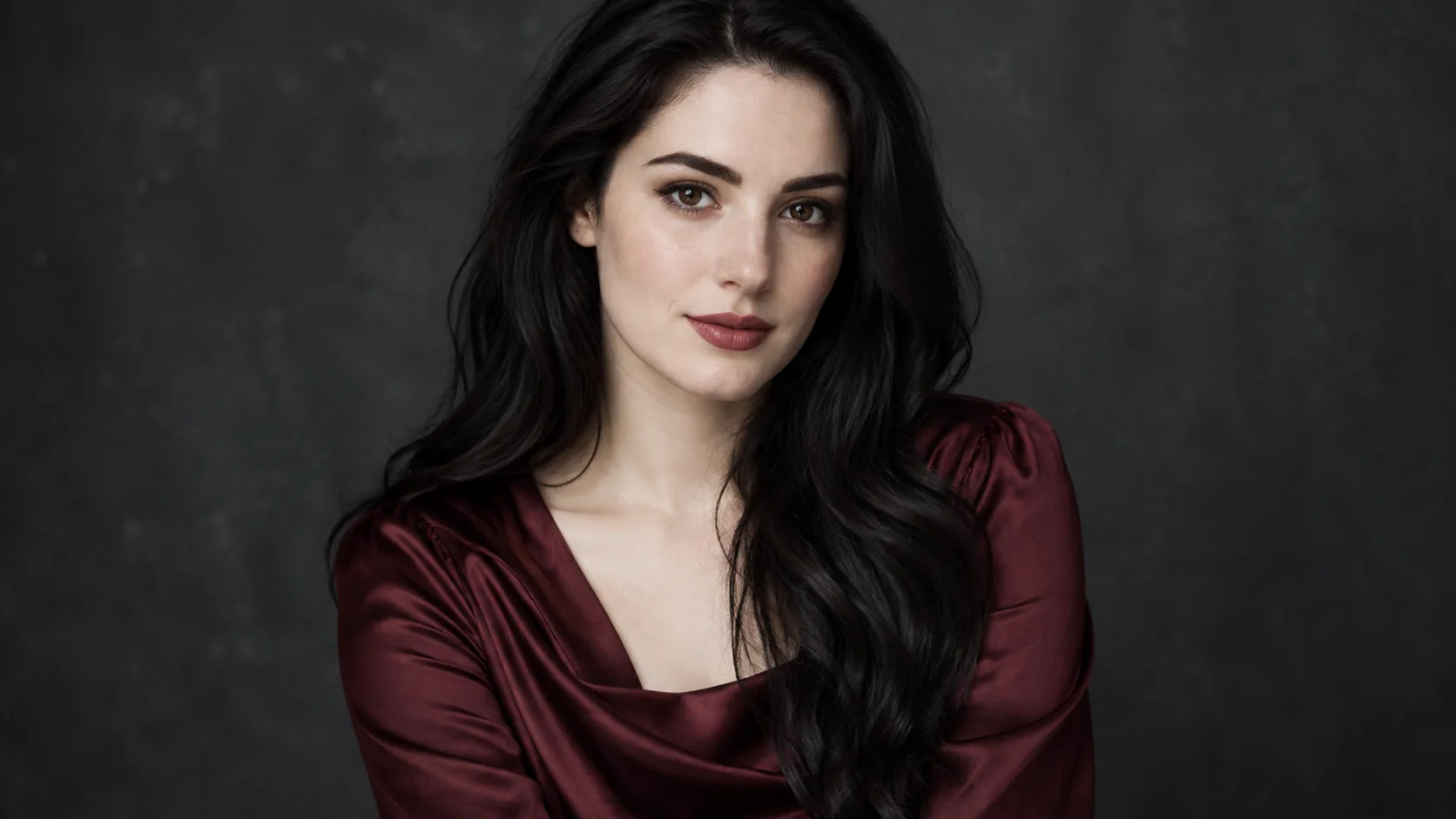
The Dark Winter color palette is one of the 12 seasons in seasonal color analysis. It is defined by cool undertones with exceptional depth and high contrast — the darkest, most dramatic of the three Winter sub-seasons. If you are a Dark Winter, your most flattering colors are deep, rich, and purely cool: true black, deep burgundy, cool forest green, and icy white. The this season reflects the mood of a midnight winter landscape — deep shadows, frozen lakes reflecting a dark sky, and the sharp contrast of white snow against black trees. Unlike True Winter, which emphasizes clarity and saturation at medium depth, the Dark Winter palette pushes into deeper territory. Unlike Bright Winter, which leans vivid and electric, Dark Winter is commanding and luxurious. Depth here describes the whole face, not the skin alone — porcelain skin with near-black hair can still be a pale deep winter. The depth in your palette borrows from Autumn — you share some territory with Dark Autumn — but the cool undertone keeps you firmly in Winter. This means you can wear some deeper shades that True Winter cannot, but warm earth tones will always wash you out. A free color analysis quiz or AI tool can confirm whether Dark Winter is your season and unlock your complete this palette.
“
Looking best in dark colors is often taken to mean black and nothing else. The the palette runs considerably wider — deep burgundy, forest green and plum carry the same depth with more life in them.
Dark Winter Color Palette: Core Colors
True Black
Deep Burgundy
Cool Forest
Icy White
Deep Navy
Cool Plum
True Black
Deep Burgundy
Cool Forest
Icy White
Deep Navy
Cool Plum
Your Core Dark Winter Palette
These six colors form the backbone of every Dark Winter wardrobe. True black and deep navy are your daily neutrals. Deep burgundy and cool forest are your statement colors. Icy white and charcoal fill the gaps with cool-toned contrast.
The foundation of the Dark Winter color palette includes the deepest jewel tones and the crispest cool neutrals. True black is your anchor — Dark Winter is one of the very few seasons where pure black genuinely flatters rather than drains. Deep burgundy is the signature Dark Winter shade: a cool, wine-dark red that reads as luxurious without any orange warmth. Cool forest green adds richness and depth — this is not sage or olive, but a deep blue-green that feels like velvet. Icy white replaces cream as your light neutral, creating the sharp contrast that Dark Winter coloring demands. Deep navy works as a softer alternative to black for daywear, while cool plum adds a sophisticated purple accent that bridges your darks and your icy lights. Charcoal completes the neutral foundation — warmer than black but still firmly cool-toned.
“
Replacing warm browns with deep navy and charcoal is where most Dark Winter wardrobes turn a corner. The neutrals do more work than the accent colors.
Deep Burgundy, Cool Forest, and True Black: Your Dark Winter Power Colors
Deep Burgundy
#6B1A2A
The signature Dark Winter shade — a cool, rich wine red that commands attention without warmth. Wear it as a blazer, lip color, or evening gown.
Cool Forest
#1A3A2A
A deep, blue-based green that reads as luxurious and grounding. Unlike olive or sage, this green has zero warm undertone.
True Black
#0A0A0A
Your most powerful neutral. Dark Winter is one of the few seasons where head-to-toe black looks intentional, not draining.
Power Colors in Action
Deep burgundy, cool forest, and true black are the three colors that make Dark Winters look the most striking. Unlike warm reds or bright greens, these shades match your natural depth and cool undertone precisely.
Deep burgundy is arguably the most distinctive color in the Dark Winter color palette. This is not a warm wine or a bright cherry — it is a cool, blue-based burgundy that sits between crimson and plum. Wear it as a wool coat from Max Mara, a silk blouse for the office, or a berry lip for evening. It flatters every Dark Winter skin tone because it echoes your natural depth without fighting your cool undertone. Cool forest green is the Dark Winter answer to the olive and sage greens that warm seasons wear. This deep, blue-based green reads as rich and grounding — think a forest at twilight, not a sunlit meadow. A cool forest blazer from COS or a deep green cashmere sweater from Everlane are versatile investment pieces. True black is your superpower. While other seasons need to be careful with black — it can drain Soft Summers, overwhelm Light Springs — Dark Winter carries it effortlessly. Your high contrast between hair, skin, and eyes mirrors the intensity of black. A well-cut black blazer, black trousers, or a black turtleneck are not boring basics for you — they are a canvas that makes your features pop.
“
A deep burgundy wool coat is the piece that most often demonstrates what your palette can do. It reads as expensive in a way plain black rarely manages.
What Changes When You Wear Dark Winter Color Palette Colors
The difference between wearing the wrong and right Dark Winter color palette colors is dramatic — perhaps more so than any other season, because Dark Winter coloring is inherently high-contrast. In warm tones — a camel blazer, a mustard scarf, a warm brown jacket — Dark Winter skin looks sallow and dull. The warm pigments fight against your cool undertone, and the lightness of colors like camel lacks the depth your coloring needs. Switch to this palette — a deep burgundy blazer, a navy scarf, a cool forest jacket — and your skin immediately looks clearer, your eyes sharper, and your features more defined. The transformation is not subtle. Dark Winter coloring thrives on depth and coolness working together. A Dark Winter in a deep navy suit looks powerful. The same Dark Winter in a warm tan suit looks washed out and tired. The distinction is always about temperature and depth, not just darkness — a warm dark chocolate brown still clashes because the warmth is wrong, even though the depth is right.
Avoid
Camel Blazer
Choose
Deep Burgundy Blazer
Camel adds a yellow cast and lacks depth. Deep burgundy from the palette matches your natural intensity and cool undertone.
Avoid
Warm Cream Top
Choose
Icy White Top
Warm cream muddies the contrast. Icy white — this season light neutral — sharpens it dramatically.
Avoid
Warm Peach Blush
Choose
Cool Berry Blush
Peach blush sits on top looking foreign. Berry from the Dark Winter palette melts into the skin and creates natural depth.
“
Camel is marketed as a timeless neutral and is anything but for this season — warm, mid-light and slightly dusty, which is three problems at once. Deep navy fills the same role without them.
Icy Accents and Unexpected Dark Winter Color Palette Shades
Unexpected Accent Colors
Icy Violet
#9B8BB4
Deep Teal
#0A3A3A
Cool Raspberry
#8B1A3A
Charcoal
#2A2A3A
While deep jewel tones are the obvious anchors of the Dark Winter color palette, the palette also includes some lighter and more unexpected shades. Icy white is not just a neutral — it is an active styling tool. A crisp icy white shirt under a dark blazer creates the high-contrast snap that defines Dark Winter at its best. Icy violet, a cool light purple, works beautifully as a scarf or accessory color — it adds lightness without warmth. Deep teal, sitting between blue and green on the cool spectrum, is an evening accent that few other seasons can wear at this depth. Cool raspberry — brighter than burgundy but still firmly cool — is this palette answer to the warm coral that warm seasons wear. Even charcoal, which might seem like a neutral afterthought, plays a specific role in the palette: it softens the intensity of true black for daywear while maintaining the cool foundation. The thread connecting these shades is depth combined with coolness — even the lighter accents have a cool, clear quality rather than a warm or muted one.
Beyond the Jewel Tones
Icy violet, deep teal, and cool raspberry add dimension to the Dark Winter palette. These unexpected accents prove that Dark Winter is not just about darkness — it is about cool clarity at every depth level.
“
Icy violet is not an obvious choice until the palette explains it. Against dark hair the contrast is exactly what makes it work.
Colors to Avoid in the Dark Winter Color Palette
Colors to Avoid
Warm Orange
Camel
Warm Brown
Peach
Muted Sage
Mustard
The Dark Winter color palette explicitly excludes anything warm, muted, or too light. Warm orange is the most jarring color for Dark Winters — its strong yellow-red base creates an immediate clash with your cool undertone. Camel and warm brown, staple neutrals for Autumn seasons, make Dark Winter skin look sallow and tired because they lack both the coolness and the depth your coloring needs. Peach, a warm pink-orange, sits on Dark Winter skin looking foreign and disconnected. Muted sage green, which flatters Soft Summers beautifully, looks washed-out on Dark Winter because it lacks saturation and depth. Mustard yellow — warm, earthy, and medium-toned — is the opposite of everything your palette stands for. Even within the pastel spectrum, warm pastels like butter yellow, apricot, and warm pink will drain your natural drama. The only light colors that work for Dark Winter are icy-toned: icy white, icy violet, icy pink — light colors with a cool, clear base rather than a warm or muted one.
The warm neutrals deserve a closer audit than the obvious brights, because they hide in plain sight. Our breakdown of the Dark Winter colors to avoid ranks all twelve by how much damage they do at face level and pairs each one with the cool shade that replaces it.
Common Mistakes Dark Winters Make
Understanding the Dark Winter color palette intellectually is one thing — applying it without overcorrecting is another. Many Dark Winters fall into predictable traps that limit their wardrobe instead of expanding it.
✕
Thinking the Dark Winter color palette means "only black"
✓
Black is your neutral, not your entire wardrobe. Your the palette includes deep burgundy, cool forest, deep navy, cool plum, and deep teal. Use black as a canvas and add one saturated Dark Winter color per outfit.
✕
Confusing Dark Winter with Dark Autumn
✓
Dark Autumn has warm undertones — its palette includes warm chocolate, olive, and golden amber. Your this season is cool — deep burgundy replaces warm wine, cool forest replaces warm olive, charcoal replaces warm brown.
✕
Avoiding all light colors
✓
Icy pastels — icy white, icy violet, icy pink — are part of your Dark Winter palette. They are cool and clear, not warm and muted. Use them as contrast pieces against your darks.
✕
Wearing warm neutrals to blend in at work
✓
Deep navy, charcoal, and true black are your palette work neutrals. Khaki, tan, and warm brown are not neutral for you — they actively fight your undertone under office lighting.
“
All-black dressing is usually a way of avoiding color decisions altogether. Deep burgundy, cool forest and navy are just as safe for a Dark Winter and considerably less flat.
How to Use Your Dark Winter Color Palette Daily
Start building your Dark Winter color palette wardrobe with three key pieces: a deep navy blazer, an icy white blouse, and true black trousers. These three items create a complete capsule foundation. Add deep burgundy and cool forest as statement pieces — a wool coat, a silk scarf, a structured handbag. For makeup, choose cool-toned foundations with pink or neutral undertones, berry or cool plum blush, smoky charcoal or deep navy eyeshadow, and deep burgundy or cool raspberry lip colors. this palette accessories should be silver, platinum, or white gold — skip yellow gold and rose gold entirely. Not sure if the palette is right for you? Take our free color analysis — our AI analyzes your selfie and matches you to your exact season in seconds.
Picture a winter midnight — true black sky, deep burgundy, and icy white snow under a cold moon. Dark Winter is deep and cool: dramatic, high-contrast, and crystalline rather than warm.
Cool, deep, and high-contrast
How to Combine Your Dark Winter Colors
Three combinations drawn entirely from the Dark Winter palette — each pairing harmonises because the two colors share this season's defining quality.
True Black
Icy White
Maximum cool contrast
Dark Winter is one of the few seasons that can wear stark black-and-white — its deep, cool coloring matches that drama instead of being overpowered by it.
Deep Burgundy
Deep Navy
Deep cool tones
Two dark, cool jewel tones layer richly together — Dark Winter combinations stay deep and cool from top to bottom.
Cool Plum
Deep Teal
Cool jewel pairing
Plum and teal both carry cool depth, giving Dark Winter the saturated, crystalline contrast it carries so well.
Shopping for Dark Winter Colors by Name
Look for 'deep', 'true black', 'icy', and 'cool'; warm 'camel', 'orange', and 'peach' read muddy against Dark Winter’s cool, crystalline depth.