
Personal Color Analysis From One Selfie
This personal color analysis reads your skin, hair and eyes from one photo and places you in one of 12 seasons, so you know which colors light up your face and which ones flatten it. The first read is free and needs no account.
Start your personal color analysis
Your photo is sent securely for AI color analysis. Signed-out photos are not saved.
Rather look before you upload? Compare all 12 season palettes side by side.
What a personal color analysis measures
A personal color analysis checks three traits of your natural coloring: undertone, depth and clarity. Each trait has two directions, and your season is where the three meet.
Undertone
Golden or peachy skin leans warm; pink or bluish skin leans cool. Olive skin often sits between the two.
Depth
How light or dark your hair, skin and eyes are together. Fair skin with dark hair reads deeper than fair skin with blonde hair.
Clarity
Clear eyes and sharp contrast carry saturated colors. Blended, low-contrast coloring looks best in muted ones.
Spring and Autumn are the warm families, Summer and Winter the cool ones, and each splits into a light, deep, bright or soft version. That is why a personal color analysis hands you a palette, not a single favorite color.
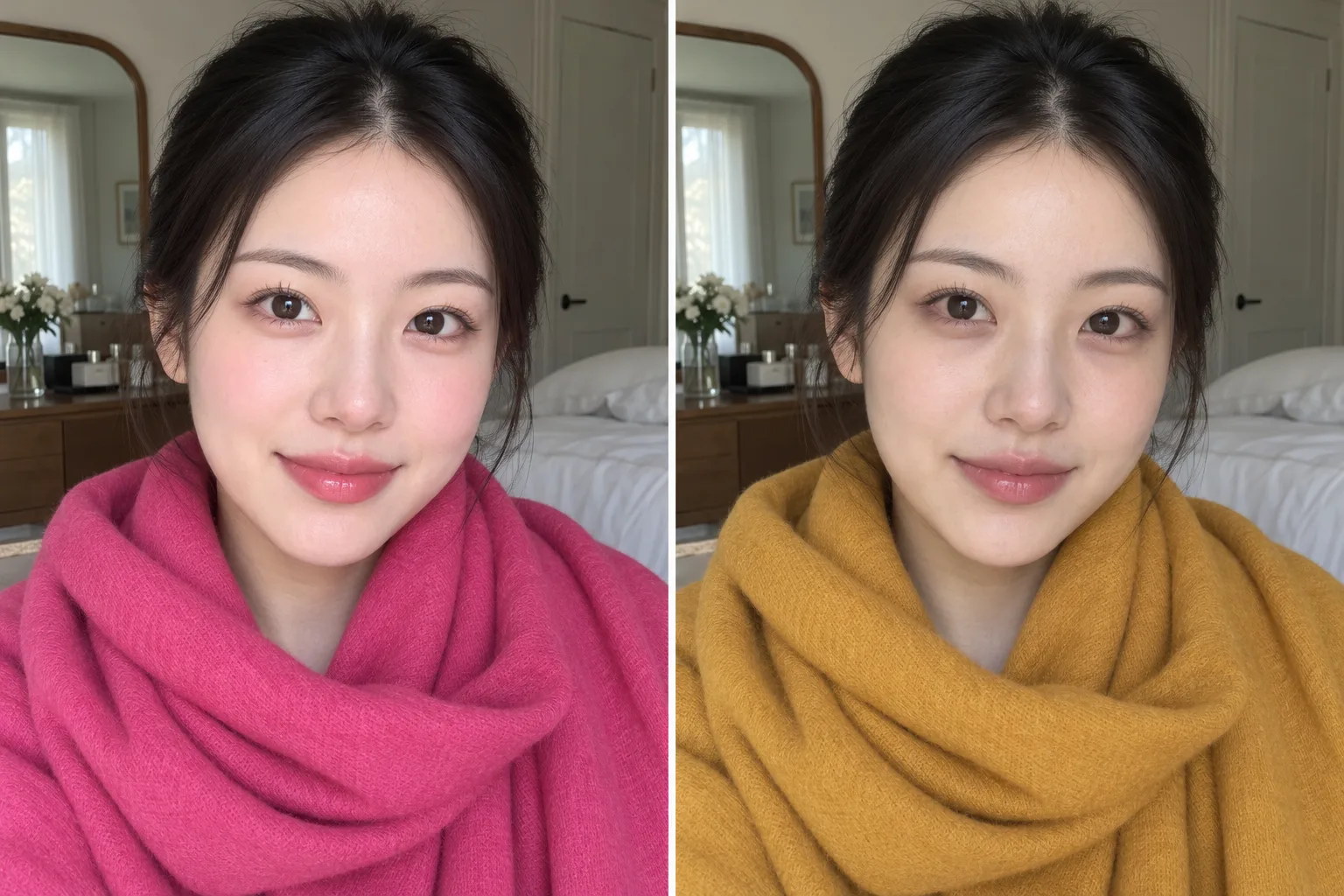
Why one scarf changes your face
Draping is the oldest personal color test: hold a fabric under the chin and watch the skin, not the fabric. The right color evens out redness and makes the eyes look clearer. The wrong one deepens the shadows under the eyes and turns skin grey or yellow.
Our personal color analysis reads the same three traits a draping session watches for, then names the palette that keeps your face, not your clothes, in focus.
How to take a selfie for personal color analysis

1. Face a window
Daylight from the front, no lamp behind you. Warm bulbs push any personal color analysis toward Autumn; cold LED light pushes it toward Winter.

2. Upload it unfiltered
Send the photo straight from the camera. Beauty mode smooths and warms skin, which is exactly what the personal color analysis is trying to read.

3. Answer, then shop
A few questions (makeup, dyed hair, vein color, metals) let the read weigh dyed hair less. Then take the palette to your closet.
Upload the same photo twice and your personal color analysis comes back the same: it is stored, not rolled again. If you want a second opinion, take a new selfie in different daylight instead.
Studio, Korean or AI personal color analysis
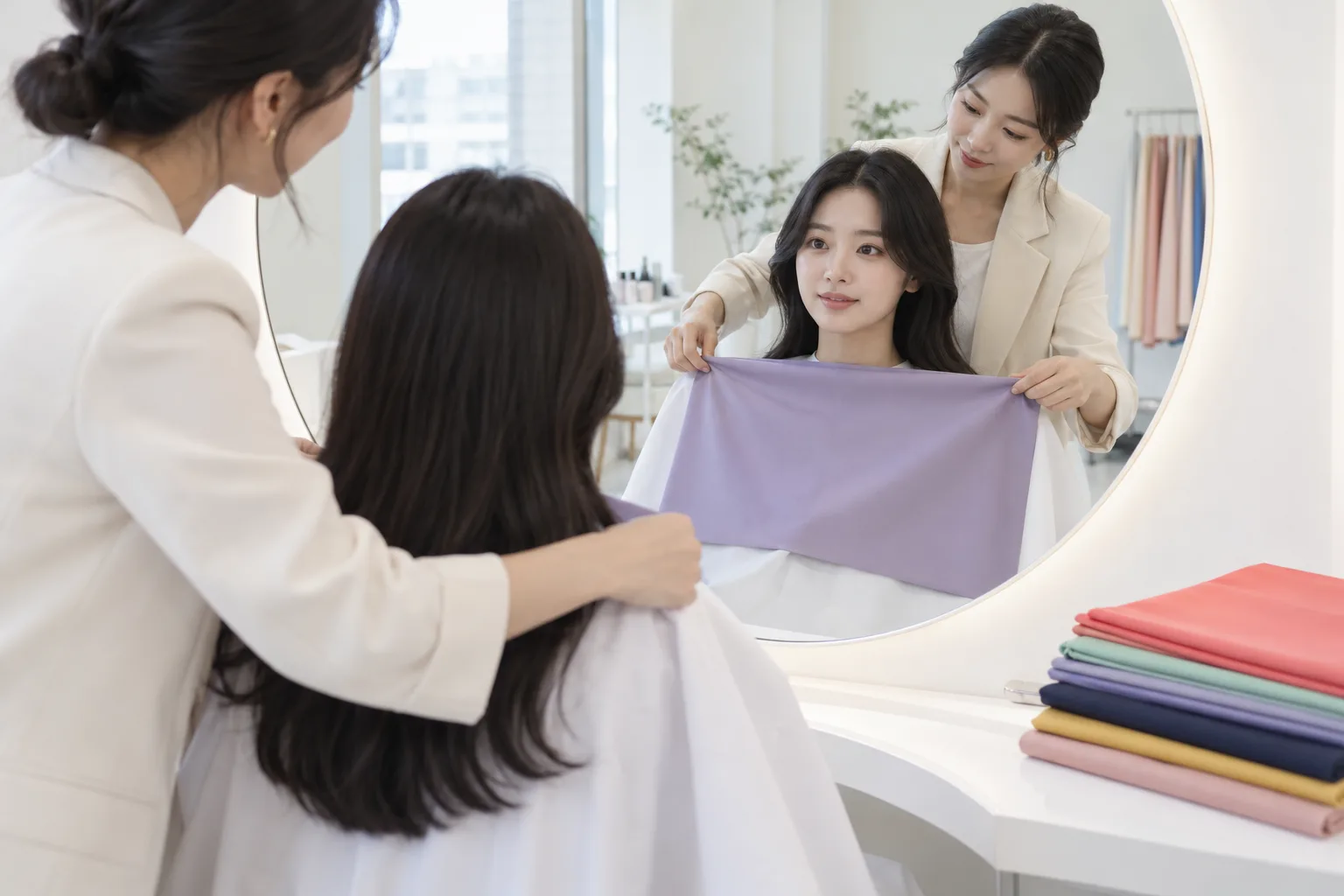
A studio personal color analysis drapes dozens of fabrics under your face and usually takes an hour or more, at a price of a few hundred dollars. You leave with a fabric swatch book and a trained eye's opinion, read under the studio's light.
Korean personal color analysis, the version popular in Seoul studios, sorts people into four tones (spring warm, summer cool, autumn warm, winter cool) and then into light, bright, mute or deep. It maps neatly onto the 12 seasons we use.
An AI personal color analysis trades the swatch book for speed: one selfie, about a minute, and a palette on your phone that goes with you to the store.
Korean tones and their 12-season match
- Spring warm lightLight Spring
- Spring warm brightBright Spring
- Summer cool lightLight Summer
- Summer cool muteSoft Summer
- Autumn warm muteSoft Autumn
- Autumn warm deepDark Autumn
- Winter cool brightBright Winter
- Winter cool deepDark Winter
Using your personal color analysis result
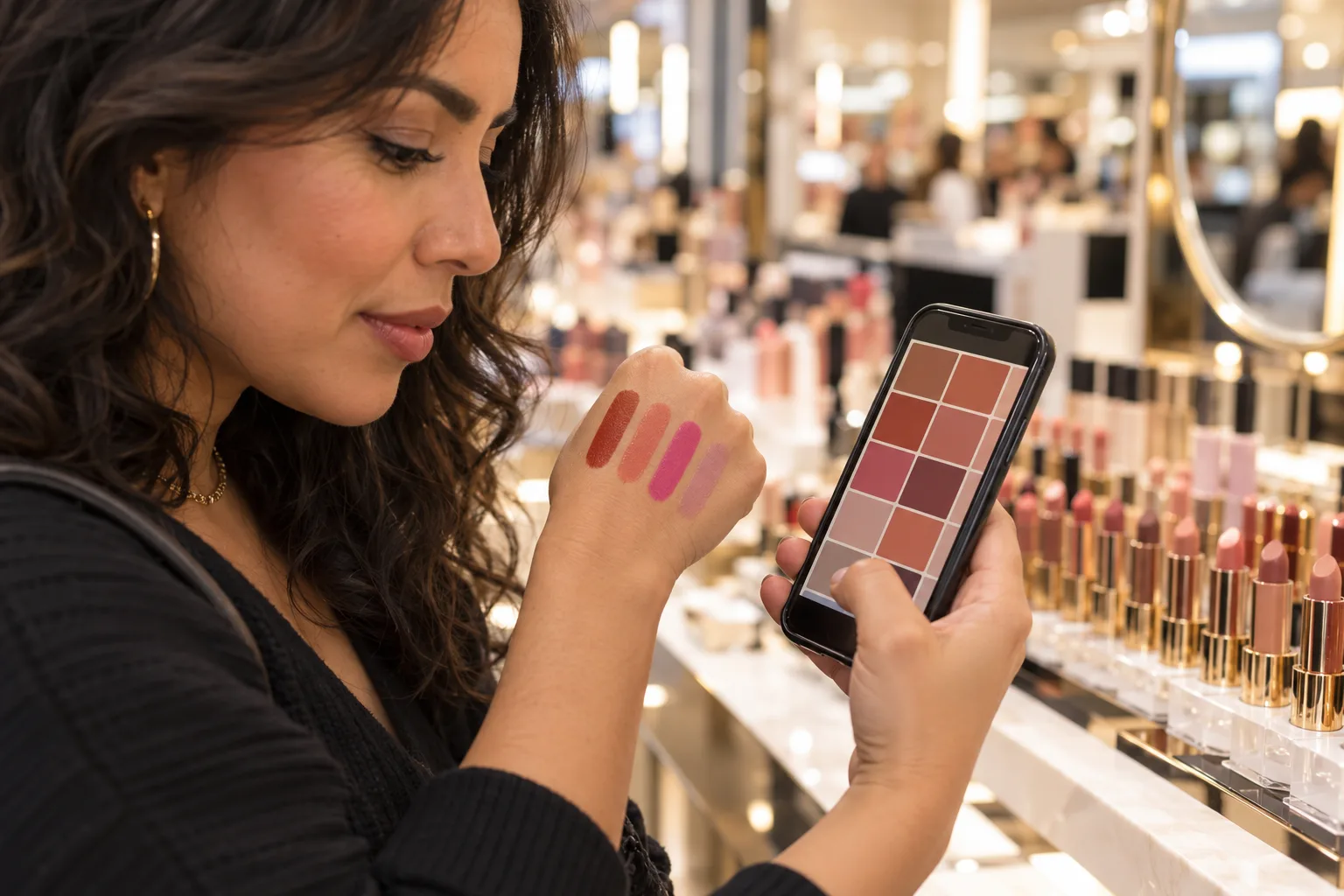
The result is a palette you use where colors get picked. At the makeup counter, swatch on the back of your hand and keep the shades that sit in the same family as your palette. In the closet, it matters most for tops, scarves and collars, since those sit next to your face. At the salon, ask for hair tones with the same warmth as your palette.
The free personal color analysis names your season and shows its core colors. The full reading ($12.90, one payment, 7-day refund) adds pages written from your own photo: makeup shades to take to the counter, hair colors to ask for, and which metals suit you.
With a free account, every personal color analysis you run is kept in My Results with its palette, so you can compare reads taken in different light and pull your colors up while you shop.
Personal color analysis FAQ
Is this personal color analysis really free?
Yes. Your first personal color analysis needs no account and costs nothing. A free account adds 3 credits for another read in different light. The only paid part is the full written handbook for your photo ($12.90, one payment).
How accurate is an AI personal color analysis?
It is as good as the photo. In even daylight with filters off, the read is steady: the same photo always returns the same season. Mixed indoor light is the usual cause of a surprising result, so retake the selfie by a window before you trust or dismiss it.
Is a personal color test the same thing?
Close. A personal color test usually means a quick quiz or one photo check, while a personal color analysis ends in a season and a palette you can shop with. Here the photo test and the analysis are one step.
Does it work for dark skin and for men?
Yes. A personal color analysis reads depth and undertone against your own hair and eyes, not against a fair-skin default, and none of the 12 seasons is gendered. Men mostly use the palette for shirts, knitwear and glasses frames.
Can my season change over time?
Undertone stays put, but a deep tan, gray hair or a big hair color change can shift depth or clarity enough to move you to a neighbouring season. Run a new personal color analysis after a change like that.