
All Seasons
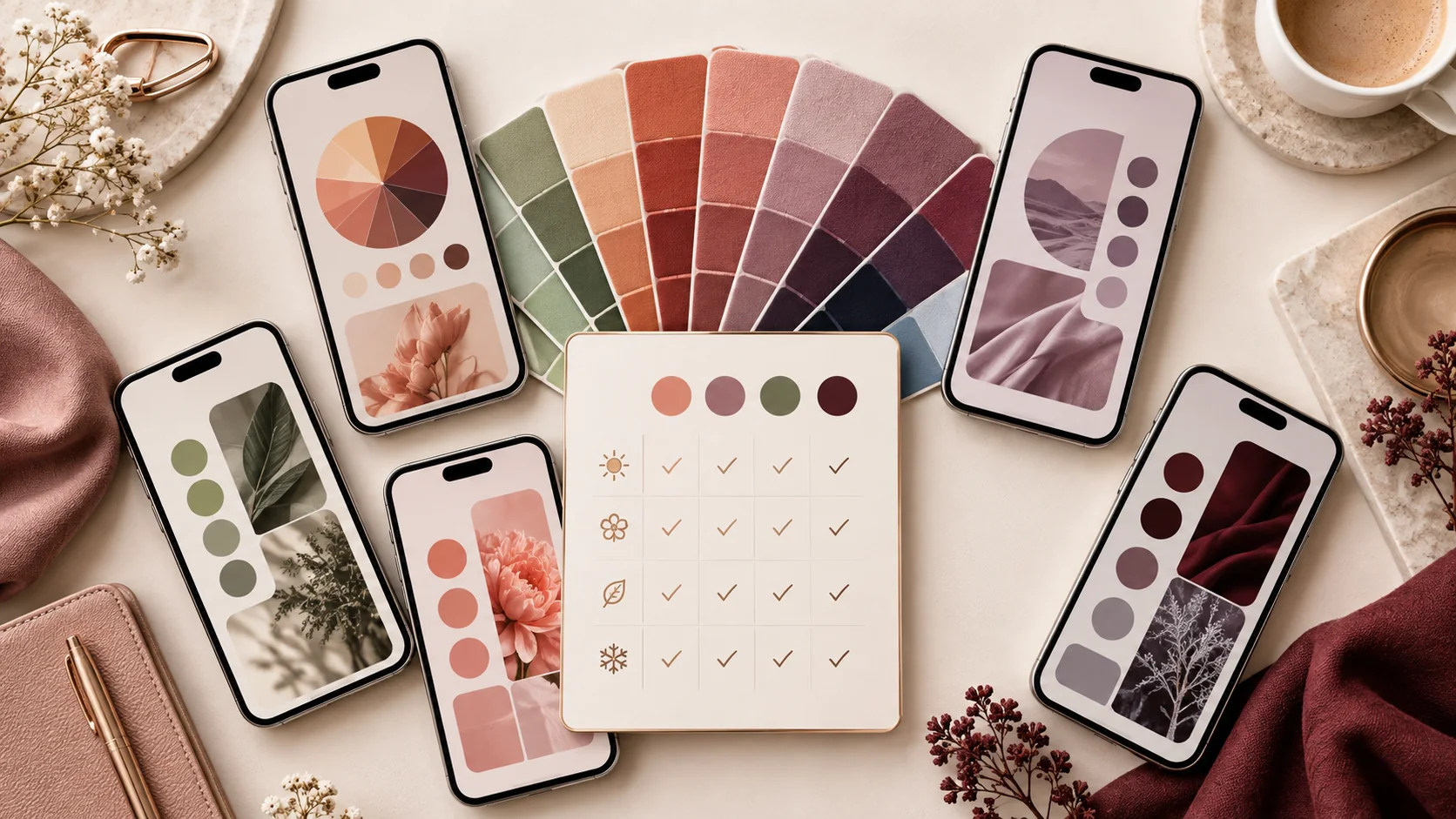
Best Color Analysis App 2026: 7 Tools Compared
The best color analysis apps of 2026 compared by input, result, price, privacy, and real use case—with honest strengths, limits, and who each tool suits.
Sep 24, 2026 · 13 min read

Aiyi is the founder and lead editor at Color Season AI. With a background in visual design and a personal obsession with seasonal color theory, she writes in-depth guides that blend research with real-world styling advice.
Your skin has two layers of color. The surface shade — light, medium, dark — is the one you see at first glance. Underneath that sits your undertone: a subtle warmth or coolness that never changes, no matter how much sun you get or how many shades darker you tan. Two people can share the exact same surface shade and still look completely different in the same outfit because their undertones pull in opposite directions. A warm undertone carries golden, peachy, or olive-yellow pigments beneath the surface. A cool undertone runs pink, red, or blue-violet. This is not about skin color — it is about the color beneath the color. Understanding the difference between cool vs warm undertones is the single most useful thing you can learn about dressing well, choosing makeup, and even picking the right hair color. Once you know your undertone, every color decision gets simpler.

Skin has a golden, peachy, or yellow-olive cast. Veins at the wrist tend to look green or olive. Gold jewelry feels like it was made for you. You tan easily and rarely burn bright red. Warm undertones glow in earthy colors — terracotta, camel, warm olive, burnt orange.

Skin has a pink, rosy, or blue-red cast. Veins appear blue or purple. Silver jewelry looks more natural against your skin. You tend to burn before you tan. Cool undertones come alive in jewel tones — sapphire, plum, cool berry, icy lavender.
“Mismatched undertones can quietly read as "bad at picking colors" for years before the real issue surfaces: warm shades worn on cool skin. Switching to silver-toned jewelry across the board is often the single change that makes the difference visible.
The easiest way to understand cool vs warm undertones is to see them side by side. Every difference flows from one fact: warm undertones have more yellow-based pigment, and cool undertones have more blue-based pigment. This single difference affects which metals flatter you, which clothing colors wash you out, and even which foundation shade blends seamlessly versus sitting on top of your skin like a mask. Here is the full breakdown of warm vs cool undertones across the categories that matter most.
Warm Undertone
Cool Undertone
Vein Color
Green or olive
Blue or purple
Best Metal
Gold, brass, copper
Silver, platinum, rose gold
Sun Reaction
Tans easily, rarely burns
Burns first, tans slowly
White Shirt
Cream/ivory looks better
Bright/blue-white looks better
Power Colors
Terracotta, olive, peach, camel
Navy, plum, berry, teal
Worst Colors
Fuchsia, icy blue, stark grey
Orange, mustard, warm beige
Foundation Hint
Yellow or golden in the name
Pink or porcelain in the name
Eye White Tint
Slightly ivory or warm
Slightly blue-white or clear
Why This Matters for Shopping
When you see "nude" or "neutral" labeled on clothing or makeup, it is almost always calibrated to one undertone. A "nude" lipstick made for warm undertones will look grey or ashy on cool skin. Knowing your undertone turns confusing shade names into a filter you can trust.
You do not need a professional to figure out whether you have warm or cool undertones. These at-home tests work best in natural daylight, near a window, with a clean face (no makeup). Try all four — if three or more agree, you have your answer. If the results are split, you may be neutral (more on that below).
Turn your wrist over and look at the veins on the inside. Green or olive veins suggest warm undertones. Blue or purple veins suggest cool undertones. If you see both equally, you may be neutral.
Hold a piece of gold jewelry against your inner wrist, then swap it for silver. Warm undertones glow in gold and look slightly off in silver. Cool undertones are the opposite. If both look equally good, you are likely neutral.
Hold a sheet of bright white paper next to your bare face. If your skin looks yellowish or golden against the paper, you lean warm. If it looks pink or rosy, you lean cool. If it looks grey or balanced, you may be neutral.
Think about how your skin responds to sun. Warm undertones tend to tan evenly and quickly, rarely burning. Cool undertones tend to burn first and tan slowly, if at all. This is not definitive alone but adds a useful data point.
“I did the vein test in three different lighting conditions and got the same answer every time. Sometimes the simplest test is the most reliable.
Not everyone falls neatly into warm or cool. Neutral undertones sit in between — a mix of golden and pink pigments that do not lean strongly in either direction. If the vein test shows you both green and blue veins equally, if gold and silver jewelry both look flattering, and if you can wear both warm and cool colors without either looking terrible — you probably have a neutral undertone. Neutral undertones are sometimes called "olive" when they carry a greenish-grey cast, which is common in Mediterranean, East Asian, and South Asian skin. Neutral does not mean "no undertone." It means your undertone is balanced enough that you have more flexibility with colors — but you will still look best in muted, mid-range tones rather than the extremes of either warm or cool. Think dusty rose instead of hot pink, sage green instead of neon lime, and soft gold instead of brassy yellow.

Neutral skin often has a slightly olive or grey-green tint that does not photograph as obviously warm or obviously cool. The telltale sign: you struggle to decide in the vein test because both colors are clearly present. Foundation matching is harder — you often sit between two shade families.
Neutral Is Not a Free Pass
Having neutral undertones does not mean every color looks good on you. It means a wider range works — but extremes on either end (very warm orange, very icy blue) can still wash you out. Muted, mid-saturation colors are your sweet spot.
Beyond warm vs cool undertones, there is a third category that most guides skip entirely: olive. Olive undertone is not the same as neutral — it is a distinct greenish-grey pigment layer beneath the surface that can coexist with either warm or cool undertones.
A warm olive has golden-green skin that tans easily and looks best in earthy khaki, warm teal, and terracotta. A cool olive has grey-green skin that reads "ashy" and looks best in muted cool tones — dusty rose, sage, and greyed-out navy.
Golden-green cast. Tans quickly. Veins look olive-green. Gold jewelry works but warm foundations often look too orange.
Best in: olive green, warm teal, terracotta, muted gold. Seasons: Soft Autumn, True Autumn
Grey-green cast. Burns before tanning. Veins look blue-green. Silver jewelry flatters but "pink" foundations look wrong.
Best in: sage, dusty teal, muted plum, cool grey. Seasons: Soft Summer, Dark Winter
Balanced green — not strongly warm or cool. Both gold and silver work. The hardest undertone to foundation-match.
Best in: muted mid-range tones. Avoid extremes of warm or cool. Seasons: Soft Autumn or Soft Summer
Why Olive Gets Mistyped
Olive undertones are frequently misidentified as warm because green reads as "earthy." But many olive-skinned people look terrible in classic warm colors like orange and bright gold — because their olive is actually cool-leaning. The vein test is less reliable for olive skin: veins often look greenish regardless of actual temperature. The gold vs silver test is more accurate.
If you suspect olive undertones, the clearest test is foundation matching. If every foundation looks either too pink or too orange — and you always feel stuck between warm and cool shade families — you are almost certainly olive. Look for foundations specifically labeled "olive" or "neutral-warm" from brands like NARS, MAC, or Koh Gen Do.
Knowing your cool vs warm undertones is the first step. The 12-season color analysis system takes it further by adding two more dimensions: depth (light vs dark) and chroma (muted vs clear). Your undertone determines which half of the color wheel you belong to — warm seasons (Spring and Autumn) or cool seasons (Summer and Winter). From there, depth and chroma narrow you down to one of 12 specific seasons, each with a curated palette of colors that harmonize with your natural coloring. Here is how the warm and cool seasons break down.
Warm Seasons
Golden, peachy, or olive undertones. Best in earthy, warm, and sun-kissed colors. Springs are lighter and brighter; Autumns are deeper and more muted.
Cool Seasons
Pink, rosy, or blue undertones. Best in jewel tones, icy shades, and blue-based colors. Summers are softer and muted; Winters are deeper and vivid.
The at-home tests work, but they rely on your own eyes — which are biased. You have looked at your face in the mirror thousands of times and your brain auto-corrects what it sees. A photo under consistent lighting removes that bias. AI color analysis goes a step further: it evaluates visible undertone, depth, clarity, and contrast, then maps the result to a specific season in the 12-season system. It does not just tell you warm or cool — it tells you exactly which season you are, with a curated palette of your best colors. The entire process takes about thirty seconds, it costs nothing, and a signed-out photo is not saved. If you have been going back and forth between the vein test and the gold test and still cannot decide, this is the fastest way to get a directional answer.
One limit is worth knowing before you lean on any photo tool: undertone is the reading a camera handles worst, because auto white balance shifts the whole frame further than real skin ever varies. That is why our full face analysis reports skin depth and leaves temperature to a drape test — it will tell you the shape of your face, its proportions and how old the photo reads, and it stops short of calling warm from cool off a single JPEG.
→Find Your Exact UndertoneFree · 30 seconds · Signed-out photo not saved“I spent two weeks doing tests and reading articles. The AI took 30 seconds and told me I was Soft Autumn. I held up gold jewelry — it was right. I held up silver — it was right that it was wrong. I wish I had started there.
Foundation is where cool vs warm undertones matter most — the wrong match sits on top of your skin like a mask, while the right one disappears. The key is undertone, not shade depth. A medium-depth warm foundation and a medium-depth cool foundation look identical in the bottle but completely different on skin.
The most common mistake: choosing foundation by how it looks on your hand. Hands tan differently from faces and often skew warmer. Always test on your jawline in natural light.
Warm Undertone Foundation
Cool Undertone Foundation
Shade names contain
"Golden," "Warm," "Honey," "Sand"
"Rose," "Cool," "Porcelain," "Pink"
MAC example
NC (Neutral Cool = actually warm)
NW (Neutral Warm = actually cool)
NARS example
Stromboli, Syracuse, Barcelona
Mont Blanc, Salzburg, Vallauris
Oxidation risk
Can turn orange after 2 hours
Can turn pink-grey after 2 hours
Fix if wrong
Mix in a drop of blue corrector
Mix in a drop of yellow corrector
The MAC Naming Trap
MAC labeling is notoriously backwards. "NC" (Neutral Cool) is actually warm-toned, and "NW" (Neutral Warm) is actually cool-toned. If you have been confused by MAC shade matching, now you know why — the labels refer to what the foundation neutralizes, not what it is.
For olive undertones, standard warm and cool foundations both look wrong. Seek out brands with dedicated olive ranges: NARS (shades like "Vallauris"), MAC (look for "N" neutral shades), and Koh Gen Do (their Aqua Foundation is beloved by olive-skinned users). If nothing matches perfectly, mixing a warm and cool shade together often produces the best result.
The same warm-vs-cool principle that governs your best clothing colors extends to hair. A warm undertone glows in golden, caramel, and copper hair tones. A cool undertone looks best in ash, mushroom, and cool brown shades. The wrong temperature in your hair creates the same clash as the wrong shirt color — but you wear it every day.
Here is the breakdown by undertone type.
Warm Undertone Hair
Golden base, sun-kissed warmth, honey or copper tones
Cool Undertone Hair
Ash base, smoky tones, no golden warmth
Neutral undertones have the most flexibility — you can wear both warm and cool hair tones, but muted versions of either work best. A neutral-warm leans toward soft caramel; a neutral-cool leans toward mushroom brown.
The easiest diagnostic: if your hair pulls brassy or orange after coloring, your formula was too warm. If it looks ashy or mousy in a way that washes you out, it was too cool. Your colorist can adjust temperature with a toner without re-processing.
Seeing cool vs warm undertones on familiar faces makes the concept concrete. These celebrities have similar skin depths but opposite undertones — and you can see the difference in which colors make them glow versus which colors make them look tired.
Avoid
Beyoncé in Cool Silver
Choose
Beyoncé in Warm Gold
Beyoncé is warm-toned. Silver jewelry and cool blue gowns wash out her golden skin. Gold and terracotta bring her to life.
Avoid
Lupita in Warm Gold
Choose
Lupita in Cool Cobalt
Lupita Nyong'o is cool-toned. Warm gold competes with her skin. Cool cobalt blue and jewel-toned purple make her glow.
More examples across skin depths: Jennifer Aniston (cool) looks best in dove grey and dusty rose, while Julia Roberts (warm) shines in caramel and warm red. Both have similar light-medium skin — but completely different undertone temperatures.
For deeper skin, Rihanna (warm) looks stunning in gold, coral, and earth tones, while Viola Davis (cool) commands attention in cobalt, emerald, and silver. Same depth range, opposite palettes.
Undertone is independent of skin shade. Once you internalize this, the cool vs warm undertone system becomes a filter that works for any complexion.
Seeing the colors side by side is the fastest way to internalize the difference between warm and cool undertones. Below are two complete palettes — one built for warm undertones, one for cool. Notice how the warm palette gravitates toward yellow-based hues while the cool palette leans into blue-based hues. Even the neutrals are different: warm neutrals are camel and olive, while cool neutrals are grey and navy.
Warm Undertone Palette
Earth tones, golden hues, and sun-warmed colors. Every shade has a yellow or orange base.
Cool Undertone Palette
Jewel tones, icy shades, and blue-based colors. Every shade has a pink or blue base.
Warm Undertone: Everyday Outfit
Cool Undertone: Everyday Outfit
Even after reading about warm vs cool undertones, people make a few predictable mistakes. Here are the most common — and how to avoid them.
Confusing skin shade with undertone — "I have dark skin so I must be warm."
Undertone and shade are independent. Dark skin can be warm, cool, or neutral. Lupita Nyong'o (cool) and Beyoncé (warm) have similar depth but opposite undertones.
Testing veins under indoor fluorescent light.
Artificial light adds color casts. Always check veins in natural daylight near a window for an accurate read.
Wearing foundation that matches your face but not your neck.
Match foundation to your jawline and neck. Your face can flush, tan, or have redness that skews the undertone reading.
Assuming your undertone changed because you got a tan.
Tanning changes your surface shade, not your undertone. A cool-toned person with a deep tan is still cool-toned — just darker.
Using a single test and calling it definitive.
No single test is 100% reliable. Use all four methods (vein, metal, paper, sun) and go with the majority. Or let AI analyze your photo for an objective reading.
Still between two answers?
Analyze my photoFirst one free, then 3 credits each · 3 credits when you sign up
The best color analysis apps of 2026 compared by input, result, price, privacy, and real use case—with honest strengths, limits, and who each tool suits.
Sep 24, 2026 · 13 min read

Soft autumn vs soft summer — see the exact color differences, overlapping shades, and a 5-question self-test to find which muted season you are.
Apr 28, 2026 · 12 min read

Dark Autumn vs Dark Winter — take the 30-second undertone test, compare palettes side-by-side, and see which deep-toned season actually flatters your skin.
May 19, 2026 · 10 min read
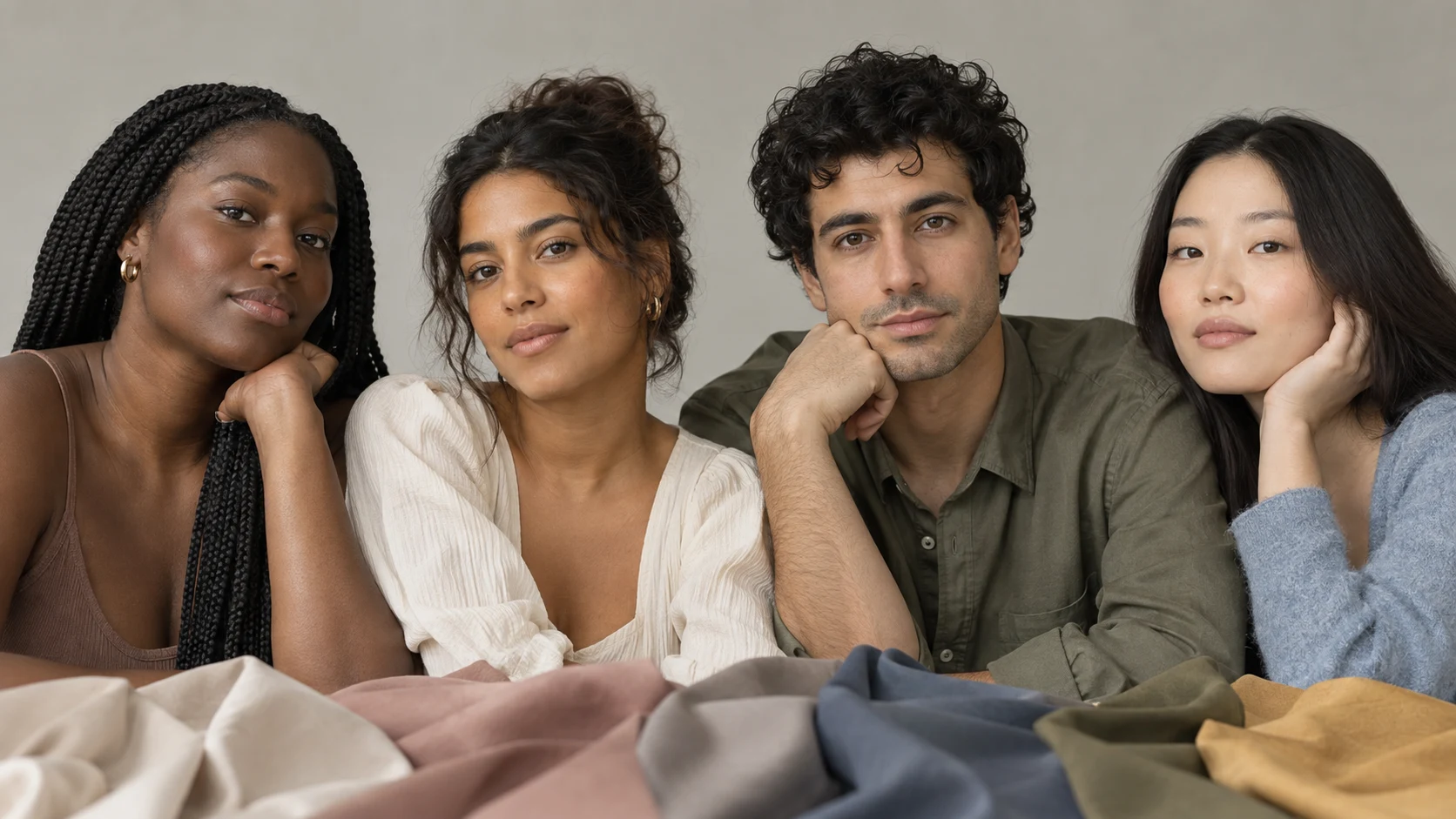
See how accurate AI color analysis is for dark and Asian skin, why apps disagree, what truly free means, and how to take a reliable photo.
Sep 27, 2026 · 15 min read