

All Seasons
Sage Green Color Palette & Hex Code #9CAF88 by Season
Sage green hex code is #9CAF88 — plus every shade from light (#B2BFA0) to deep (#8A9A5B), color pairings, and which seasons wear this muted green best.
Apr 17, 2026 · 18 min read

Aiyi is the founder and lead editor at Color Season AI. With a background in visual design and a personal obsession with seasonal color theory, she writes in-depth guides that blend research with real-world styling advice.
Tan is one of the hardest-working neutrals in fashion and interiors — and the colors that go with tan span almost the entire wheel. The logic is simple color theory. Tan is a warm, low-saturation brown, so it sits near navy and blue on the opposite side of the wheel (which is why navy-and-tan looks so crisp), shares warm-muted DNA with olive and rust as analogous neighbors, and recedes gracefully behind almost any other neutral — cream, white, chocolate, charcoal.
But not every tan behaves the same way. A golden, camel-leaning tan loves rust, mustard, and chocolate brown. A cooler greige-leaning tan looks best with navy, charcoal, and soft mauve. The shade of tan you start with decides which of the colors that go with tan will read as deliberate rather than accidental.
This guide gives you 15 specific pairings with hex codes, splits them by warm versus cool tan, flags the combinations to avoid, and then goes one step further — showing which tan suits your skin tone based on seasonal color analysis. Whether you are building an outfit or styling a room, the right tan combination starts here.
“Tan gets paired with white and brown out of habit. A camel coat with a navy scarf is what makes the combination look planned rather than default.

These are the most reliable colors that go with tan across fashion, interiors, and graphic design. Each one works with more than one shade of tan, though a few are at their best with a specific tone — noted in the strip below.
The Hex Code Rule
When you are shopping online, screenshot the hex codes above and compare them against product photos with a color picker app. Store lighting and screen calibration shift colors more than you would think — the hex code is your most reliable reference for matching the colors that go with tan accurately.
The cleanest tan combination — sharp, fresh contrast at any formality level
Tonal warmth — cream softens tan without the starkness of pure white
Tan's near-complement — navy grounds tan with cool depth, a timeless pairing
Tone-on-tone earth — chocolate anchors camel for a rich monochrome-brown look
Soft and romantic — blush warms tan into a gentle, photogenic palette
Earthy neighbors — olive and tan share warm-muted DNA, effortless together
Warm heritage — rust deepens tan's golden quality for an autumnal look
Muted and calm — sage adds a fresh, dusty green that never fights tan
Utility meets edge — black sharpens khaki tan for a modern, grounded contrast
Rich and refined — burgundy gives tan a deep, jewel-toned counterpoint
Golden harmony — mustard amplifies camel's warmth for a vintage palette
Unexpected cool — teal's blue-green is a striking contrast against warm tan
Soft contrast — charcoal is the gentler alternative to black with tan
Calm and airy — a low-saturation blue that pairs like sky over sand
Deep nature palette — forest green gives tan a grounded, woodland richness
Classic tan (#D2B48C) sits at RGB (210, 180, 140) and HSL (34°, 44%, 69%) — the reference hex if you ever need to match colors that go with tan in a swatch tool or design app.

Not every tan pairs with the same colors. A sandy, golden tan and a grey-leaning greige read as completely different neutrals — and the colors that go with tan shift right along with them. The fastest way to get pairings right is to first decide which side of the line your tan is on.
Warm Tan — Sand · Golden · Camel
Cool Tan — Greige · Taupe
Undertone
Yellow-gold; reads sunny and rich
Grey-beige; reads soft and quiet
Best companions
Cream, rust, olive, mustard, chocolate brown
White, navy, charcoal, dusty blue, soft mauve
Best color seasons
Soft Autumn, True Autumn, Light Spring
Soft Summer, Light Summer, cooler Soft Autumn
Metals
Yellow gold, brass, bronze
Silver, pewter, brushed nickel
Avoid pairing with
Icy pastels, stark black, cool ash greys
Warm orange-reds, golden yellows, terracotta
Within the warm family, the individual shades have their own best friends: light honey sand (#E3D5B8) loves warm ivory and coral; classic tan (#D2B48C) is happiest with cream, navy, and olive; camel (#C19A6B) deepens beautifully with rust and chocolate; and a true khaki tan (#BBA77E) leans utilitarian and takes black, olive, and forest green.
On the cool side, greige (#B7AEA1) and stone (#CFC7B8) behave almost like warm greys — pair them with crisp white, navy, dusty blue, and soft mauve, and keep your metals silver rather than gold. If you are ever unsure which family a tan belongs to, hold it next to a sheet of pure white paper in daylight: a yellow cast means warm, a grey cast means cool.
Tan is forgiving, but a few combinations create the kind of visual tension that reads as a mistake rather than a choice. Flip each card below to see the pairing to skip — and the small swap that fixes it.
The Squint Test
Hold the outfit — or the room — at arm’s length and squint. If you can still tell each color apart, the combination works. If they blur into one murky middle, they are too close in value or clashing in temperature. It is the fastest gut-check for any of the colors that go with tan.
Tan with a muddy mid-brown that is too close in value — the two colors blur into one murky block.
Classic Tan
Muddy Brown
Keep one element light and one deep, or break the pairing with a third color like navy or olive.
Honey Sand
Chocolate Brown
Navy Accent
Tan with a cool ash grey — the grey looks dirty and the tan looks dull next to it.
Classic Tan
Ash Grey
Swap ash grey for charcoal, deep enough to read as intentional, or for a warm greige instead.
Classic Tan
Charcoal
Tan with neon brights — neon yellow or hot pink overpowers tan’s quiet warmth.
Classic Tan
Neon Yellow
Hot Pink
Dial the saturation down: mustard instead of neon yellow, dusty rose or blush instead of hot pink.
Classic Tan
Mustard Gold
Dusty Rose
A light tan with head-to-toe black — the contrast crushes the tan’s softness.
Honey Sand
Pure Black
Use black as a small accent (a belt, shoes, a bag), or switch to charcoal so the tan still breathes.
Honey Sand
Charcoal
Layering a pink-beige with a yellow-tan — close neutrals with opposite undertones clash.
Pink Beige
Yellow Tan
Match undertones: warm tan with warm camel, cool greige with cool taupe. Check them side by side in daylight.
Warm Camel
Golden Tan
The thread running through all of these: match the intensity, and give the colors enough separation in value. When one element is muted and the other is neon, the pairing looks accidental. When two browns sit a hair apart on the value scale, they turn to mud. Keep one light, one deep, and pull saturation down to tan’s level — that single habit prevents most tan pairing mistakes.
None of this means tan is fragile. It is one of the easiest neutrals to wear; it just rewards a little attention to undertone and contrast the way every neutral does.

Tan comes about as close to a universal neutral as a color gets — but the shade of tan that flatters you depends on your personal coloring, specifically your seasonal color type. In seasonal color analysis, your undertone, contrast level, and natural depth decide which tan reads as effortless on you and which one reads as tired.
If you have ever owned a camel coat that looked incredible on a friend and washed you out, the answer is usually a temperature mismatch. A cool-leaning Soft Summer in a golden-yellow tan can look sallow; a warm True Autumn in a grey greige can look drained. The colors that go with tan matter — but the tan itself matters first.
Warm Season Tans
Soft Autumn, True Autumn, Light Spring — choose tans with golden warmth
Cool Season Tans
Soft Summer, Light Summer — choose tans that lean greige
Not Sure Which Season You Are?
Your color season tells you which tan — and which colors that go with tan — will actually work on you. Take our free color analysis to find your season in about a minute.
Muted seasons (Soft Autumn, Soft Summer) wear soft, dusty tans best — greige, mushroom, and a low-key camel — paired with equally muted companions. Deep seasons (Dark Autumn) look richest in a saturated camel paired with chocolate, rust, and bronze. Light seasons (Light Spring, Light Summer) shine in pale honey sand — heavy, dark camels can overwhelm their delicate coloring.
The practical move: pull the tan toward your temperature. Warm coloring goes golden tan, camel, honey sand; cool coloring goes greige, stone, soft taupe. Then build the rest of the outfit from the companion list that matches that temperature.

The best tan outfit is one where the tan and its companions both match your seasonal palette. Here are four formulas — one per season archetype — that show how the colors that go with tan shift with your personal coloring.
Soft Autumn — Camel Base
True Autumn — Golden Tan
Soft Summer — Greige
Light Spring — Honey Sand
Notice the pattern: warm seasons pair tan with warm companions (cream, rust, mustard, bronze), while cooler seasons pair tan with cooler ones (soft white, dusty blue, mauve). That is the whole principle behind seasonal color analysis — your best combinations always echo your undertone.
For a Dark Autumn, push the camel formula deeper with espresso brown and antique gold. For a muted look that leans green, sage green slots into almost any of these formulas as a soft secondary. And if you like this shade-plus-season approach, it is exactly what powers our companion guide to the colors that go with blue — worth a read if navy is a wardrobe staple for you. Your full season palette — every tan that works plus every companion — lives in your season guide.
Tan works for every setting — the trick is choosing the right depth of tan and pairing it with the colors that go with tan at the right formality level.
Tan chinos or a camel sweater with a white or cream tee is the easiest start. Add olive, rust, or denim through a jacket or sneakers. Keep it tonal and let one warm accent do the work.
A tan or camel blazer reads as a softer alternative to navy or grey. Pair with cream, white, or a deep navy shell. Add burgundy or forest-green accessories to sharpen it without going loud.
A tan or camel suit, or a sand-toned dress, photographs beautifully in daylight. Pair with blush, soft sage, or cream. Choose gold or rose-gold jewelry over bright silver to keep the warmth cohesive.
Take tan deeper for night: camel with chocolate brown and a touch of gold, or tan with burgundy and black accents. Satin and suede in these shades read richer under low light than flat cotton.
The formality scale of tan runs from light to deep: a pale sand reads casual and sun-washed, while a deep camel reads polished and grown-up. That is why honey sand is perfect for a weekend market run but feels thin in a boardroom, and why a camel topcoat looks expensive at dinner but heavy at a beach picnic.
When you are not sure which companion to reach for, default to cream or white. Both work at every formality level, with every shade of tan, and never look wrong.

The colors that go with tan in interiors follow the same color theory as fashion, but the proportions change. In a room, tan usually plays the dominant role — walls, a big sofa, a rug — while the companions show up as accents.
Tan walls look warm and grounded next to cream trim, brass fixtures, and walnut wood. Add navy through art, a chair, or textiles and the whole scheme suddenly looks deliberate rather than safe. Olive or sage green — in plants, ceramics, cushions — brings in an organic note that sits naturally against tan.
For bedrooms, a tan-and-cream base with soft mauve or dusty-blue accents reads serene; keep metals brushed nickel or silver if your tan leans cool. For living rooms and kitchens, tan plus walnut plus brass is the warm, layered combination that is hard to get wrong.
Tan / Sandstone
#D2B48C
The anchor wall, sofa, or rug color — warm and grounding, pairs with almost anything
Warm Cream
#F5EFE3
Trim, linens, and large furniture — keeps tan rooms light without going stark white
Navy
#1F3A5F
Accent chairs, art, and textiles — cool depth that makes warm tan look intentional
Brass / Gold
#C9A227
Lighting, hardware, and frames — amplifies tan’s warmth and adds polish
Olive / Sage
#7C8559
Plants, cushions, and ceramics — an organic green that sits beautifully against tan
Walnut Wood
#5C4530
Floors, shelving, and tables — natural depth that anchors a tan-heavy room
The most common interior mistake with tan is letting it go flat — a room of nothing but tan and beige reads as unfinished rather than serene. Aim for roughly 60% warm neutrals, then break it: one cool accent (navy, charcoal, dusty blue), one organic green, and one metal. That contrast is what turns a tan room from beige-on-beige into something that looks composed.
Quick answers to the most common questions about pairing tan.
Tan is warm. It lives in the yellow-brown family with a sandy, golden base, which is why the colors that go with tan best are usually other warm tones — cream, camel, olive, rust — or cool anchors like navy that provide deliberate contrast.
For tan clothing, the safest companions are white, cream, navy, chocolate brown, and olive green. Tan pants pair with a white shirt and brown shoes; a camel coat works over cream knitwear and dark denim; a tan dress looks polished with blush or sage accessories.
Yes, but mind the proportion. A light tan with head-to-toe black can feel harsh — use black as an accent (shoes, belt, bag) instead of a large block, or switch to charcoal so the tan still reads soft. A deeper camel handles black far more easily than pale sand.
They overlap but are not identical. Beige is paler and can lean grey or pink; tan is a little deeper and more golden-brown. When you layer neutrals, match undertones — warm tan with warm beige, cool greige with cool taupe — or the two can clash.
Tan walls or a tan sofa pair beautifully with warm cream, navy, brass, olive or sage green, and walnut wood. Keep roughly 60% warm-toned elements so the room feels cozy rather than flat, and use navy or charcoal as a grounding accent.
Yes — tan and navy is one of the most reliable color combinations there is. Navy sits near tan’s complement on the color wheel, so the warm-cool contrast looks crisp and intentional in both outfits and interiors.
Tan is close to a universal neutral, but the shade matters. Warm, golden, and deep skin tones glow in camel and golden tan; lighter, cooler complexions look fresher in greige and stone-toned tans. If you know your color season, match the tan’s temperature to it.
White and cream are the foolproof choices for tan pants. For more interest, try navy, olive green, rust, or burgundy on top. Avoid a brown top that is too close to the pants in value — it muddies the look unless you break it with a third color.

The colors that go with tan are nearly endless — but the exact shade of tan and the companions that flatter you come down to your personal coloring. A warm-toned person glows in golden camel paired with cream, rust, and bronze. A cooler-toned person looks fresher in greige paired with white, navy, and soft mauve.
Seasonal color analysis takes the trial and error out of it. Instead of buying three camel coats before one finally looks right, you start from the tans that already harmonize with your skin, hair, and eyes — and the companion colors that make them sing.
Our free AI color analysis reads your season from a single selfie in under a minute. You get your full palette, including which tans belong in your wardrobe and which colors that go with tan are your strongest companions.
Whether you lean toward pale honey sand, a classic mid-tan, or a deep autumn camel, the right tan combination is the one that makes you look as rested and put-together as you actually are.
Skip the guesswork
Analyze my photoFirst one free today, then 3 credits each · 10 credits when you sign up
Sage green hex code is #9CAF88 — plus every shade from light (#B2BFA0) to deep (#8A9A5B), color pairings, and which seasons wear this muted green best.
Apr 17, 2026 · 18 min read

Cloud Dancer, cobalt blue, cherry red, mocha mousse — the 2026 color trends decoded by season. See which of the 8 trending shades flatter you and which to skip.
Apr 17, 2026 · 14 min read

Discover the best colors that go with blue — from navy to powder blue. 20 pairings with hex codes, outfit ideas, and which blues suit your skin tone.
May 7, 2026 · 20 min read
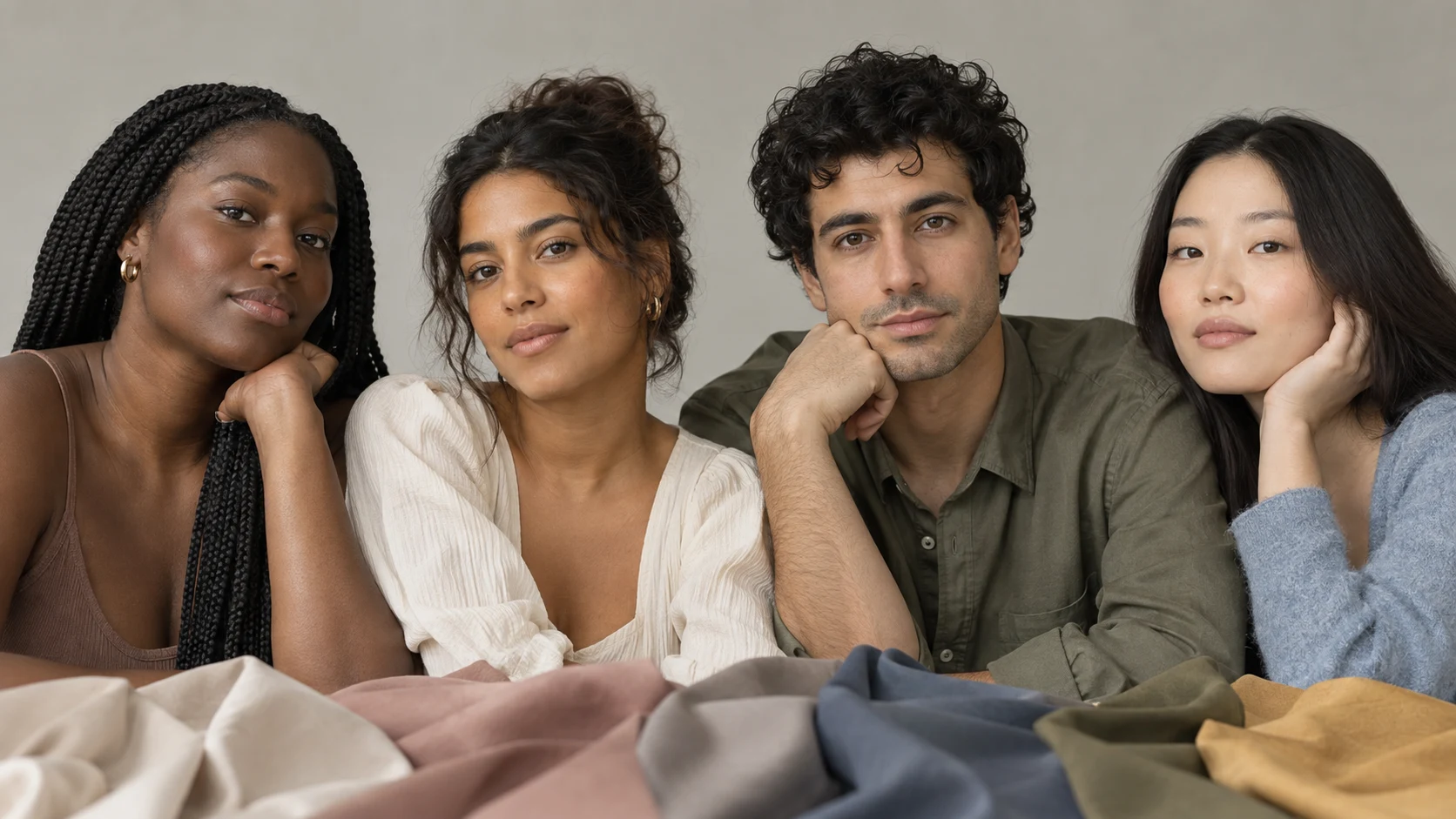
See how accurate AI color analysis is for dark and Asian skin, why apps disagree, what truly free means, and how to take a reliable photo.
Sep 27, 2026 · 15 min read